Sunday, March 7, 2010

New Study Confirms Cannabis as an Effective Painkiller

A new California state-sponsored study has found that medical cannabis can reduce pain for patients suffering from HIV/Aids, multiple sclerosis, and cancer.

“This study confirms all of the anecdotal evidence that those of us who have been in the midst of this epidemic for many decades now," San Francisco Democratic State Senator Mark Leno told Capital Public Radio, "how lives have been saved and pain has been eased as a result of medical marijuana.”

Researchers at The Center for Medicinal Cannabis Research at UC-San Diego say the experiments, which involved two-hundred people participating in five different test groups, show that cannabis was just as good or better than traditional pain medications.

A news release from The Center for Medicinal Cannabis Research says the group "was created in 2000 (through the passage of SB847) to conduct clinical and pre-clinical trials of cannabinoids, including smoked marijuana, to provide evidence, one way or the other, to answer the question 'Does marijuana have therapeutic value?'"

“We focused on illnesses where current medical treatment does not provide adequate relief or coverage of symptoms,” said Dr. Igor Grant, CMCR director and Executive Vice-Chair of the Department of Psychiatry at the UCSD School of Medicine. “These findings provide a strong, science-based context in which policy makers and the public can begin discussing the place of cannabis in medical care.”

“These scientists created an unparalleled program of systematic research, focused on science-based answers rather than political or social beliefs,” Senator John Vasconcellos said in the release. Vasconcellos was the original author of The Medical Marijuana Research Act of 1999 (SB847), which led to the creation of the CMCR.

The study (PDF) was presented to the California legislature and public on February 17, 2010.

Thursday, March 4, 2010

Scare mongor Bayever at it again

South Africa is in danger of becoming a major hub for drug trafficking, the UN Office on Drugs and Crime said on Thursday.

West African syndicates had recently become major drug traffickers after Central American cartels began using them due to difficulty with their traditional routes, the office's Jonathan Lucas said at the release of the International Narcotics Control Board's annual report.

"Increased surveillance on traditional routes had made them become unprofitable."
He said if these new routes through West Africa were successfully dealt with by authorities, Central American cartels would again look for other alternatives.

"When they are diverted, will they come to South Africa? Maybe."
There was also a danger the 2010 World Cup would worsen drug trafficking.
During the tournament law enforcement and customs officials would be under pressure due to massive tourist inflows.

"We are aware it is going to be a big problem for us," said Central Drug Authority deputy chairman David Bayever.

He described trafficking cartels as "well-researched guys that know where the loopholes are".
Despite these threats SA's drug problem remained primarily a domestic one, with alcohol and dagga use being well above global averages.

"Cannabis use was three times the global average in South Africa and its alcohol consumption put it in the top 10 of countries."

{it's alcohol consumption put it in the top 10 countries... ehm SA's alcohol
consupmtion has INCREASED 10 FOLD since Bayever has been head of the CDA,
likewise our "above the global average" cannabis consumption: IE what you - YES
YOU DAVID BAYEVER are doing IS NOT WORKING!!!!!!}

Bayever said drugs and substance abuse problems were the underlying causes of such ills as HIV and Aids, violence and crime.

"It is not the result of these problems, but the cause of them. In order to deal with these problems we need to handle substance abuse."

Most of South Africa's cannabis was grown in Lesotho, Swaziland and South Africa, said the office's national co-ordinator Johan Kruger. The region was actually a net exporter of cannabis to other countries.

Bayever said an additional problem would be the extension of school holidays during the World Cup. In addition to being at risk for substance abuse, children may also be lured into prostitution.

"Our youth are going to be on holiday and they are going to be targeted to become prostitutes," said Bayever. - Sapa

Thursday, January 21, 2010

BREAKING NEWS–CA Supreme Court Strikes Down Medical Marijuana Limits

Unanimously the California Supreme Court struck down a law that looked to impose limits on the amount of weed a medical patient can legally possess! As a result of the voter-approved Proposition 215, passed in 1996, patients with a doctor’s recommendation were allowed to possess an unspecified amount of marijuana.

In 2003, there was this Legislation created to give law enforcement a guideline on when to make marijuana possession busts. The Legislature decided that patients could have up to 8 ounces of dried marijuana and grow as many as six mature or 12 immature plants. The law did allow, however, a patient to have more if a doctor stated that amount was insufficient and individual cities had the power to allow patients to grow and possess more marijuana, but not less.

This morning the California Supreme Court ruled that state lawmakers were wrong to change provisions of the voter-approved Proposition 215. The high court says only voters can change amendments that they’ve added to California’s constitution through the initiative process.

“The California Supreme Court did the right thing by abolishing limits on medical marijuana possession and cultivation,” said Joe Elford, the top lawyer for the marijuana advocacy group Americans for Safe Access. “At the same time, the Court may have left too much discretion to law enforcement in deciding what are reasonable amounts of medicine for patients to possess and cultivate.”

The Supreme Court’s decision this morning was the result of Patrick Kelly’s bust. Kelly, from So Cal, was a qualified medical marijuana patient who was arrested back in October of 2005 for 12 ounces of weed and seven plants when a “confidential informant” snitched on him. CA’s Second Appellate District Court overturned Kelly’s conviction saying that legislatively-imposed limits for possession and cultivation of medical herb are an unconstitutional restriction to a voter approved initiative. Today’s decision upholds that ruling agreeing with Kelly’s attorney and the State Attorney General that medical marijuana limits should be abolished as unconstitutional.

Congratulations medical marijuana patients of the Great State of California…you can now possess and grow as much weed as you need!

- ohhburn

Wednesday, January 20, 2010

Live blowjobs (just kidding)

JOHANNESBURG - The attack on e.tv for screening an interview with two supposed criminals, apparently intent on making a small fortune from tourists around for the football world cup later this year, is an event of bizarre beauty. The South African police have subpoenaed two staffers from e.tv; the apparent link man between e.tv and the supposed criminals has been found dead in Soweto, after an overdose, so the story goes, of heavy duty rat poison. Swallow that; grubby story to follow soon.

Ahead of the 2010 FIFA World Cup, ANC politicians and their sidekicks have descended into a freebooting hysteria, and gushed out hot gobbledegook in industrial quantities. Police minister Nathi Mthethwa accused e.tv of sensationalism and "harbouring" criminals. ANC spokesperson Jackson Mthembu has been quoted saying that should e.tv not adhere to the ANC's requests, "they [e.tv] cannot be different from these criminals themselves" and would be "hid[ing] behind journalistic ethics and media freedoms".

This is desperate stuff, all right. But the significant degree of public "free speech" debate around this e.tv issue has been half-cocked, and dripping sick with surly and confused emotion. There has been some sense; about the most useful comment has come from Professor Anton Harber, who put it so: "Journalists should examine, expose and explain criminality and highlight threats, such as those made by these criminals. Sometimes this is awkward and embarrassing for the police".

According to Lindiwe Mazibuko, an MP and a member of the official opposition, "there have been the suggestions from some politicians that journalists in the run-up to the World Cup should engage in ‘patriotic' reporting". The really big issue for e.tv is whether or not the supposed criminals are in fact criminals, a subject that has apparently not arisen for public debate.

The bigger picture is huge; let's focus on just one criminal area, illicit drugs. Not being in the mood for some grubby subpoena, let's refer to information in the public domain. According to the most recent United Nations Office on Drugs and Crime report, South Africa is one of the world's major growers - and, more to the point, exporters - of cannabis ("dagga", "boom", "grass", etc). Cannabis is the world's biggest drug, by weight, and is characterized by a high degree of local and intra regional production and distribution.

Countries producing for export remain limited, and are largely excluded to South Africa, Nigeria, Ghana, Morocco, Afghanistan, Pakistan and Kazakhstan. Cool countries, these. While the availability of cheap and freely-available cannabis will no doubt delight certain attendees of world cup matches, the average South African appears to know as much about the country's leading status as a cannabis exporter as he or she does about what planet mars is made of.

Then there is the status of organised crime. Leaving aside those who review the latest motor vehicle, and newest tourist hotspot, perhaps the most wretched part of working in and around what is loosely known as journalism in South Africa is the near-daily ordeal of dealing with certain people that are all of, or a mixture of, cheap, tasteless, gaudy, gimcrack, bent and twisted. Some of these people are crooks, or, technically, criminals.

Take a smoking gun on one or more of these individuals to the police, or any number of regulatory authorities, and take a bet that the chance of anything materialising runs at about 0.01%. Again, to avoid the goons, just one sample that's in the public domain. Late in 1996, your humble reporter called the Johannesburg bourse, known as the JSE, and complained about securities fraud connected to Randgold & Exploration (R&E), a listed entity, in respect of its acquisition of gold assets in Mali. The JSE laughed it off.

The main character involved was Brett Kebble, later murdered in September 2005. According to summarised forensic reports since published by R&E in the public domain, R&E alone was looted by Kebble and his cronies of R1.9bn in cash, by way of shares stolen from R&E, laundered mainly through JCI (another listed entity), and then sold on the open markets for cash. According to R&E, it was effectively looted of a further R1bn in other ways. To date, not a single direct prosecution has been made. So put that cheap cannabis in your pipe, smoke it, and watch the law enforcement jackboots through the haze, as they rave on with their World Cup spin.

- MoneyWeb

Monday, December 7, 2009

Woman's grassing cops dope thieves

Three Atteridgeville police reservists were arrested after a woman complained that they had stolen her dagga, police said yesterday.

Inspector Daniel Mavimbela said the 37-year-old woman arrived at the Atteridgeville police station complaining about her missing dagga.

"She alleged that the suspects were police officials of which one of them was known to her and was spotted by a witness taking the dagga from the woman's shack."

Mavimbela said three police reservists were questioned but denied any knowledge of the dagga.

Police officers found 60kg of dagga worth an estimated R60 000 at the home of one reservist.

Two other reservists, a man, 26, and woman, 29, were arrested on charges of defeating the ends of justice, corruption and possession of dagga.

The woman who complained was also charged with dealing in drugs. - Sapa

Sunday, November 29, 2009

GDP turns the corner with 0.9% growth

A long hoped for recovery in manufacturing has helped South Africa emerge from recession. Statistics SA yesterday reported growth of 0.9 percent in the third quarter, after adjustment for inflation.

Stats SA deputy director-general of economic statistics Rashad Cassim said the figure represented a turning point in the economy, after three consecutive quarters of contraction. But he warned it should be treated with caution.

"It is a seasonally adjusted quarterly change of 0.2 percent, which has been annualised (multiplied by four), which exaggerated the trend," he said.

When gross domestic product (GDP) is measured against the same quarter of last year, the economy contracted by 2.1 percent...
- Business Report

R1m dagga bust in the Eastern Cape

Three men were arrested when police discovered dagga plants worth R1-million in Pola Park near Mthatha, Eastern Cape police said.

The men were arrested on Saturday during an operation in areas around Mthatha which started at 8am until 6.30pm, said spokesman Superintendent Mzukisi Fatyela.

The men aged 21, 30 and 32 would appear in the Mthatha Magistrate's Court on Monday.- Sapa

Monday, November 16, 2009

Matric bust with R1.8m of dagga

East London - A matriculant and three others were arrested at the weekend for being in possession of dagga worth R1.8m, the Daily Dispatch reported on Monday.

Eastern Cape police spokesperson Captain Stephen Marais said the four were arrested on Friday night at a local shop at Chalumna, East London.

The group were in possession of 47 and a half bags of dagga weighing 1.117 tons.

The suspects were aged between 18 and 38.

Marais said the 18-year-old was in Grade 12 and busy writing his matric exams.

The four were expected to appear in the East London Magistrate's Court Monday. - SAPA

Sunday, November 15, 2009

SA includes illegal, underground economies in GDP

Statistics South Africa has decided to include illegal and underground economies, when calculating the countries’ gross domestic product.

Cannabis farming will now form part of the agricultural sector while prostitution falls within the personal services sector.

It is understood the inclusion of illegal economies into GDP is already a global practice.

“Theoretically it is absolutely correct to include as much of the production in the economy as possible when you calculate GDP growth, so theoretically there is nothing wrong with including things like dagga sales in your economic statistics,” says Efficient Group Economist Dawie Roodt.

- Eyewitness News

Thursday, November 5, 2009

Wikileaks South African CDA Cannabis position paper

Herewith the South African Central Drug Authority Cannabis Position Paper. - Wikileaks

Please note those in charge in “the know” – wrote this paper

SAFERCIA is not responsible for the misrepresentation of the Canadian Senate report; or the glaring absence of number of related deaths; No serious consideration of a drug would exclude the number of deaths... or not.... from that drug

It would pertinent to note that the CDA are the people who reported back to the UN for the 2009 World Drug Report:

The only systematic monitoring of drug use in Africa is taking place in South Africa, based on treatment demand. Data for South Africa suggest that treatment demand for cannabis use increased over the first two quarters of 2008.

Including alcohol, cannabis accounted for 23.5% of substance abuse-related treatment demand in South Africa during this period.
- UN World Drug Report 2009 Cannabis Market

Excluding alcohol, What is the demand for cannabis substance abuse treatment?


I thought we were talking about systematic monitoring ... considering 51% of the people that die in South Africa do so DRUNK.

Wednesday, November 4, 2009

Science chief backs cannabis view

The UK government's chief science adviser has told BBC News that he supports the former chief drugs adviser's scientific view on cannabis.

Professor John Beddington, the UK's chief scientist, would not be drawn on whether the Home Secretary was wrong to sack Professor David Nutt.

David Nutt was chair of the Advisory Council on the Misuse of Drugs.

He was fired after using a lecture to say cannabis was less harmful than alcohol and tobacco.

Asked whether he agreed with Professor Nutt's view that cannabis was less harmful than cigarettes and alcohol, Professor Beddington replied: "I think the scientific evidence is absolutely clear cut. I would agree with it."

This is a single instance where there has been a problem. In my two years in government there has only been an instance with the ACMD
Professor John Beddington

Professor Beddington is the man ultimately responsible for scientific advice in government.

He said that he believed that the sacking had occurred because of a breakdown in trust between Professor Nutt and the Home Secretary Alan Johnson.

"I think it's very difficult - when clearly trust had broken down between the Home Secretary and Professor Nutt - to see how that could go on," he told BBC News.

He stressed the importance placed by government on obtaining clear-cut scientific advice from experts.

He added: "I think it's fair to say we need to make a distinction between scientific advice and evidence - which is the role of experts and scientific committees and the role of ministers - which is to make policy."

Inner workings

He said he did not believe that the incident revealed an underlying problem in the way government used scientific advice.

"There has been a lot of concern in the media that this is in some sense an undermining of the way in which government uses scientific advice. Let me put it in context: there are more than 75 scientific advisory committees," he said.

"This is a single instance where there has been a problem. In my two years in government there has only been an instance with the ACMD."

Professor Beddington said that he would urgently consult with other heads of expert committees to see if they had experienced difficulties in their role.

However, some senior scientists who advise government feel that the Nutt affair is reflective of the inner workings of providing scientific advice in Whitehall.

Many of the advisers I spoke to felt that their committees produce reports whose conclusions are inadequately reported because the publicity is tightly controlled by government press officers. These advisers did not want to be quoted.

Scientists are sometimes required to sign confidentiality agreements - a practise said to exist for commercial reasons. But critics claim the agreements can act as a legal gag on scientists who speak out on government initiatives.

"I'm going to be talking to the advisory committees, I'm going to get feedback from the chairmen. There are going to be cases where there has to be non-disclosure," Professor Beddington said.

"I want to know whether those cases are appropriate - if there is commercial confidentiality or there are sensitivities - or whether they are blanket."

He added: "If there was so many problems, we would not get the quality of scientific advice we get." - BBC NEWS

Monday, November 2, 2009

Kid killed for a joint.

Pretoria police have again been accused of shooting and killing an innocent man, according to a newspaper report.

According to The Sowetan, the family of Kgothatso Ndobe (21) say he had been polishing his shoes when the police arrived and said they wanted to question him and his friend, Xolani Bhoya.

Ndobe apparently panicked and ran away. A trainee officer then shot him in the head.

The trainee officer allegedly fled the scene after he realised what he had done.

Bhoya says the reason Ndobe ran away was because he had been smoking dagga when the police arrived.

Eye-witnesses say a senior officer on scene, Inspector Skosana, refused to call an ambulance or transport Ndobe to hospital.

Later still, officers at the Atteridgeville police station apparently told Bhoya that he could not open a case because the person who was supposed to open it was dead.

The latest shooting comes after Pretoria police shot at the unarmed occupants of a VW Golf last weekend after they mistook the occupants for robbers. A fortnight before that Pretoria police shot and killed Olga Kekana (29) after mistaking her and her companions for hijackers.

- TimesLive

Thursday, October 29, 2009

Booze 'more harmful than LSD'

Alcohol and cigarettes were more dangerous than illegal drugs such as cannabis, LSD and ecstasy, the British government's top drugs adviser said yesterday.

Professor David Nutt, of Imperial College London, called for a new system of classifying drugs to enable the public to better understand the relative harm of legal and illegal substances.

Alcohol would rank as the fifth most harmful drug after heroin, cocaine, barbiturates and methadone, he said in a briefing paper for the Centre for Crime and Justice Studies at King's College London.

Tobacco would come ninth and dagga, LSD and ecstasy 11th, 14th and 18th respectively. The ranking is based on physical harm, dependence and social harm.

"No one is suggesting drugs are not harmful. The critical question is one of scale and degree," said Nutt, the chairman of the government's Advisory Council on the Misuse of Drugs.

"We have to accept young people like to experiment with drugs and other potentially harmful activities, and what we should be doing... is protecting them from harm.

"We therefore have to provide more accurate information. If you think that scaring kids will stop them using, you are probably wrong."

Nutt caused controversy earlier this year by saying that taking ecstasy was no more dangerous than horse riding, a claim he repeated in his paper. - Sapa-AFP

Tuesday, October 27, 2009

Informer rats out cops

The South Gauteng High Court on Tuesday heard how senior organised crime officers raided flats around Gauteng for drugs only to sell them to drug lords.

At one point, a man who had collected the drugs to sell for the officers was arrested by another police unit for drug possession, only to be released without any charges a day later.

This was the testimony of Norman Kokoeng, who told the court he was recruited by Senior Superintendent Dumisani Jwara.

"He called to say he was promoted from Vereeniging to a Senior Superintendent in the West Rand and suggested that he should de-register me as an informant in Vereeniging and register me as his informer in the West Rand... and told me not to worry as we will operate like we did in the Vaal," Kokoeng said.

Once this was done, they and other officers continued to raid residential flats in search for drugs.

"We usually found drugs, money and 419 scam documents... Depending on the amount of money, we sometimes took the cash only and left the drugs," he said.

It was after one of the raids that Kokoeng and another man identified only as Kenneth drove to a church in Mohlakeng, Randfontein, where Captain Victor Jwili gave them drugs including crack, cocaine, mandrax and ecstasy.

Jwili continued conducting the church choir while the two left with the drugs.

Kenneth was later arrested for drug possession, but released without charge a day later - leading to charges of defeating the ends of justice against the three senior police officers on trial.

Senior Superintendent Dumisani Jwara, 43, Captain Landro Mokgosani and Captain Victor Jwili, 38, have pleaded not guilty to 13 charges against them, among them drug dealing, fraud and theft. A fourth accused, Captain Sakhepi Caiphus Shange, died in police custody in July.

Monday, October 19, 2009

New medical marijuana policy issued

WASHINGTON (AP) -- The Obama administration will not seek to arrest medical marijuana users and suppliers as long as they conform to state laws, under new policy guidelines to be sent to federal prosecutors Monday.

Two Justice Department officials described the new policy to The Associated Press, saying prosecutors will be told it is not a good use of their time to arrest people who use or provide medical marijuana in strict compliance with state laws.

The new policy is a significant departure from the Bush administration, which insisted it would continue to enforce federal anti-pot laws regardless of state codes.

Fourteen states allow some use of marijuana for medical purposes: Alaska, California, Colorado, Hawaii, Maine, Maryland, Michigan, Montana, Nevada, New Mexico, Oregon, Rhode Island, Vermont and Washington.

California is unique among those for the widespread presence of dispensaries -- businesses that sell marijuana and even advertise their services. Colorado also has several dispensaries, and Rhode Island and New Mexico are in the process of licensing providers, according to the Marijuana Policy Project, a group that promotes the decriminalization of marijuana use.

Attorney General Eric Holder said in March that he wanted federal law enforcement officials to pursue those who violate both federal and state law, but it has not been clear how that goal would be put into practice.

A three-page memo spelling out the policy is expected to be sent Monday to federal prosecutors in the 14 states, and also to top officials at the FBI and the Drug Enforcement Administration.

The memo, the officials said, emphasizes that prosecutors have wide discretion in choosing which cases to pursue, and says it is not a good use of federal manpower to prosecute those who are without a doubt in compliance with state law.

The officials spoke on condition of anonymity because they were not authorized to discuss the legal guidance before it is issued.

"This is a major step forward," said Bruce Mirken, communications director for the Marijuana Policy Project. "This change in policy moves the federal government dramatically toward respecting scientific and practical reality."

At the same time, the officials said, the government will still prosecute those who use medical marijuana as a cover for other illegal activity. The memo particularly warns that some suspects may hide old-fashioned drug dealing or other crimes behind a medical marijuana business.

In particular, the memo urges prosecutors to pursue marijuana cases which involve violence, the illegal use of firearms, selling pot to minors, money laundering or other crimes.

And while the policy memo describes a change in priorities away from prosecuting medical marijuana cases, it does not rule out the possibility that the federal government could still prosecute someone whose activities are allowed under state law.

The memo, officials said, is designed to give a sense of prosecutorial priorities to U.S. Attorneys in the states that allow medical marijuana. It notes that pot sales in the United States are the largest source of money for violent Mexican drug cartels, but adds that federal law enforcement agencies have limited resources.

Medical marijuana advocates have been anxious to see exactly how the administration would implement candidate Barack Obama's repeated promises to change the policy in situations in which state laws allow the use of medical marijuana.

Shortly after Obama took office, DEA agents raided four dispensaries in Los Angeles, prompting confusion about the government's plans.

- Yahoo Finance

Tuesday, October 13, 2009

Jails do more harm than good

The government should consider community service for those convicted of non-violent, petty crimes, because most people emerge from jail more damaged than before, Jody Kollapen, former chairperson of the Human Rights Commission, has said.

He was speaking at a public seminar on "Human Rights in African Prisons", at the Centre for the Book last night.

He acknowledged that most South Africans were angry about crime and did not want to be concerned with conditions in prison, but said that doing so was ultimately in everyone's best interests.

Kollapen, who chaired the seminar, said "we should be sending petty offenders to (work at ) hospitals and other organisations where there is a lack of staff and resources".

"These organisations can benefit from people who are doing volunteer work, while the taxpayers do not have to pay their board and lodging," he said.

"It is in our best interests as a society that people are rehabilitated."

Kollapen acknowledged the need for prisons, but said they should be reserved for those who were dangerous, those who raped and murdered, and who should spend the rest of their lives behind bars.

"Let's send people to prison who deserve to be in prison."

Dr Jeremy Sarkin, head of the UN Working Group on Enforced or Involuntary Disappearances in Cape Town, said one in every 700 people in the world was behind bars.

The world's prison population was more than nine million people.

Never before had there been so many problems in penal systems, or such large numbers of people behind bars.

Sarkin emphasised that African prisons were not the worst in the world. Conditions in Latin America, central and eastern Europe, and central Asia were far worse.

Although prisons in Africa were often considered the worst in the world, many other prison systems were more violent and overcrowded. But this did not mean that African prisons were human rights-friendly, Sarkin said.

"Many prisons are in a dilapidated condition and their practices are at odds with human rights standards," he said.

"Africa is home to 53 countries, roughly 3 000 prisons and approximately one million prisoners.

"Most prisons suffer from massive overcrowding, decaying infrastructure, a lack of medical care and hygiene, corruption and violence."

Gideon Morris, who is the director for the Judicial Inspectorate of Prisons, said South Africa should also reconsider legislation on minimum sentences.

He said 68 percent of the prison population in South Africa was serving more than five years.

"If you have more people coming into prison than those leaving, your prisons will continue to fill up until at the end of the day they overflow and there is total breakdown of the system.

"In the next few years we are going to have a serious overcrowding crisis."

- Cape Argus

Saturday, September 26, 2009

Popcru puffs up a storm

THE Police and Prisons Civil Rights Union (Popcru) is not known for doing much that is sensible. These are the guys, after all, to whom the South African National Defence Force unionists look when they seek examples on how to run riot, trash a city centre and snack on the hand that feeds them.

For a change, though, Popcru had it right when it this week pushed for the legalisation of dagga. If the South African Police Service abandoned its futile war against rokers, resources would be freed up to focus on more serious crime, said the union at its annual conference.

While the Christian organisation, Doctors for Life, slammed “Potcrew” as opening the door to hard drug use, the union argued that regulation similar to that on alcohol sales would counteract this. It is certainly true that cannabis is less addictive than nicotine and alcohol, and that moderate use poses a negligible danger to health, according to a research review by the British medical journal, The Lancet, a few years ago.

Popcru’s proposal, which has been a regular feature of its congresses for a few years, does nothing more than mirror trends elsewhere in the world towards the legalisation, or at least the decriminalisation, of dagga use.

In spite of draconian drug laws, the use of marijuana — weed, dope, pot, cannabis, Indian hemp, insangu — call it what you will, has increased steadily in every Western country. In Britain 40% of teenagers, 30% of junior hospital doctors, and 20% of university students use it regularly, although interestingly, following decriminalisation, usage among the young has fallen.

Even the rabidly hardline anti-drug United States, where about a third of the U.S. population is estimated to have tried cannabis, allows its use for medical purposes, mainly to counteract the nausea and vomiting that is caused by chemotherapy.

It is the influence of the U.S. that unfortunately makes it highly unlikely that South Africa will ever legalise dope.

The classification in international treaties of cannabis as a dangerous narcotic is the direct result of U.S. pressure. The U.S. buys into the thin-edge-of-the-wedge argument and the massive resources it throws into the “war against drugs” inclines it towards a punitive response towards any country seen as being soft on drugs.

Nevertheless, in South Africa there are sound arguments in favour of legalisation. The most compelling of these is reality.

Dagga is already the most important cash crop along the eastern seaboard. Nationwide it is estimated that the annual turnover in an informal dagga agriculture is twice that of the legal liquor trade.

Dagga is also the ideal indigenous crop. It flourishes in even the poorest soil and as a multibillion rand industry provides a livelihood to many thousands of rural people.

There is no alternative commercial crop that can come close as a substitute in terms of hardiness and the cash income produced.

Imagine the effect on the fiscus if, instead of fruitless expenditure on trying to destroy an industry which the SA Police Service has conceded to be ineradicable, dagga was legalised, controlled and taxed.

This would also relieve the SAPS of being in the unhappy position of not only having to destroy the livelihoods of the poorest of the poor, but because of the centuries-old role of dagga in African society, encouraging a potentially dangerous contempt of the law.

Dagga smokers are no more offensive than tobacco smokers and generally a hell of a lot more benign in their demeanour than those addicted to alcohol.

Nor is the legendary passivity of the dopehead an undesirable trait in a country that bubbles with potentially explosive levels of aggression.

- The Witness

Tuesday, September 22, 2009

Dagga should be legalised: Popcru

Cosatu's congress could end on a high note, with police union Popcru pushing for dagga to be legalised.

The proposal was due to come up for debate today when delegates debate resolutions.

Popcru general secretary Nkosinathi Theledi told The Star that by legalising dagga, the police would be freed to focus on fighting more serious crime.

If adopted, said Theledi, the proposal would be forwarded to the SAPS top brass for consideration.

"Whether we like it or not, dagga is being used and it should rather be legalised.

"We are saying it should be regulated ... the age limit on who is allowed to use it.

"Research even tells us that there are cases where doctors prescribe dagga for patients with particular ailments.

"If it happens, then this will save police resources - instead of chasing after (dagga sellers and producers), they can look at bigger crime," said Theledi.

Theledi, who says he does not smoke dagga, said he was initially opposed to the idea, but had been persuaded otherwise by his union.

While the use of dagga may encourage some users to try harder drugs, Theledi said regulation - such as that on alcohol sales - should be enforced.

Legalisation would also "empower the people who produce it and will add to the economy", according Theledi, stressing it would be up to congress delegates to debate and finalise the issue.

Meanwhile, Cosatu deputy general secretary Bheki Ntshalintshali said that, for the first time, the issue of global warming would feature at the congress.

- Cape Argus

Sunday, September 20, 2009

Police break Christiaan's neck for cannabis

A man whose neck was broken during an arrest for possession of dagga in 2006, is suing the government for R7-million in the Cape High Court.

Christiaan Kansanga's case against the Minister of Safety and Security got under way in court this week, with medical professionals giving evidence that severe damage had been done to Kansanga's neck during an arrest on March 6, 2006.

Kasanga's lawyer, Martin Skovgaard-Petersen, said Kasanga had been unable to work since the incident because he had "wobbly legs" and he could only walk for between "300 and 500 metres". He also had a "hanging" right arm, Skovgaard-Petersen said.

Kasanga was 29 at the time of his injury
Kasanga was 29 at the time of his injury.

He said the amount Kasanga was suing for totalled nearly R7-million and included loss of earnings, general damages, as well as future needs which included the costs of assistance, therapy, equipment and any medical treatment he would require as a result of the injury.

In an affidavit made by Kasanga following the arrest, and read out during court proceedings on Thursday, Kasanga alleged that around 9pm on March 6, 2006, he had been walking in Vredendal when a police van had pulled up alongside him.

He said he had walked towards the back of the van when one of the policemen climbed out of the vehicle.

He said he was grabbed by the neck and his head pushed down.

The men stated Kasanga had lost consciousness
One police officer had grabbed him by his right arm, and the other had grabbed his left arm and both officers pushed down together.

Kasanga stated one of the men sat on his buttocks while his face was pushed into the ground.

He then heard a "klap geluid" or clapping sound and felt an intense burning sensation in his neck and felt his lower body was lame.

The two police officers involved, Constable Randal Scheffers and Inspector Jacob Van Nieuwholtz, said in their affidavits they had been on patrol when they spotted Kasanga. They asked him where he was going and he ran away. Their affidavits state they noticed him throwing something away, which they believed was dagga, and gave chase. One of the men grabbed the rucksack on Kasanga's back, causing him to fall forwards.

The men stated Kasanga had lost consciousness and they then loaded him into the police van. When he regained consciousness at the police station, Kasanga told them he had no feeling in his lower limbs and he was transported to hospital.

Renata Wilson, for the Minister of Safety and Security, said it would be the police officers' testimony that Kasanga had fallen when his backpack was grabbed and no pressure had been put on his neck. He had been "wriggling" and attempting to escape when the two men had attempted to bring his hands behind his back to handcuff him and the two officers had no "inkling that a neck had been broken during the arrest".

Wilson said the arrest had been routine, as laid out in the South African Police Service's training manual, and excessive force had not been used.

Medical expert Dr Johan van der Spuy testified that damage at several sites along Kansanga's spine had been noted, most notably damage had been done to the fifth and sixth vertebrae and there was damage and swelling in the soft tissue of the vertebral canal.

Van der Spuy testified that these were the result of a severe flexion force (the force created when pushing the head downwards towards the chest) and a severe extension force (created when pushing the head backwards on the neck to look upwards).

He said significant pressure would have been applied in order to inflict these injuries.

In response to numerous questions from Wilson regarding the likelihood of the injuries resulting from a fall, Van der Spuy said it was "extremely improbable" such an injury could result from a fall on to a flat surface.

Questioned by Wilson as to why no bruising was evident anywhere else on Kasanga's body, Van der Spuy said it was "of no importance whatsoever" that there was no bruising and this could have been the result of the arrest being effected on a patch of grass, which would have provided some form of cushioning.

He also stated a pre-existing narrowing of Kasanga's spinal canal would not have made him more susceptible to a neck injury.

Asked why in all the thousands of arrests made by police officers monthly, only Kasanga's neck was broken, Van der Spuy responded that he could only surmise that in this instance "the mechanics of the arrest" were not standard procedure.

Van der Spuy's claims were backed up by orthopaedic surgeon Dr Jonathan Driver-Jowitt, who stated that the "extensive injuries" would have required "considerable" force to inflict.

He said it was "exceedingly unlikely that this injury would have resulted from a fall on a horizontal surface".

The case will continue on Monday when the defence team will cross-examine Dr Driver-Jowitt.

- Cape Argus

Thursday, September 17, 2009

Cannabis a brief history

David Bayever talks KAK again - by allowing his plan to continue to take 70 lives a day

The Western Cape has the highest number of dagga smokers in the country and 42 percent of dagga smokers attending treatment centres are under the age of 20.

The Department of Social Development says 39 percent use methamphetamine (tik) and eight percent use heroin, but alcohol is the most frequently abused substance by young and old.

"We have 9.2 percent of our population - twice that in other parts of the world - who use cannabis. It will be a grave mistake to legalise cannabis as elsewhere in the world," Central Drug Authority (CDA) deputy chairman David Bayever said while addressing the standing committee on community development on Wednesday.

"We legalised alcohol and never mind the money made from it - alcohol is our biggest problem. The cost to society is horrific. We cannot make the same mistake twice."

The statistics Bayever used were based on a 2000 to 2008 report the Medical Research Council did for the department.

At 16 percent, the province has the country's highest rate of binge drinking, particularly among young people and in rural areas.

Tik is the primary drug for 35 percent of all users, followed by alcohol and dagga 28 and 14 percent respectively. Thirteen percent used heroine and six percent cocaine... - Cape Times

.......

David Bayever has been in charge of the CDA for the past few years, and yet fails to account for the increase in deaths due to alcohol on his watch. Quick to lay the blame and not to make the same mistake twice??????????

Daily David 70 people die because of alcohol. Daily David you are in charge of a national pile of bodies 70 deep.

As the video below depicts not one death due to cannabis.

I say this clearly so you can understand.

FUCKOFF with your lies and mistruths!

Sunday, August 23, 2009

Book Bomb


ABOUT THE BOOK: With Marijuana is Safer, nationally recognized marijuana policy experts Steve Fox, Paul Armentano and Mason Tvert have produced the first book in history fully dedicated to examining the relative harms and the illogical legal status of the two most popular recreational substances in the world -- marijuana and alcohol. Through an objective examination of the two drugs and the laws and social practices that steer people toward alcohol, the book poses a simple yet rarely considered question: Why do we punish adults who make the rational, safer choice to use marijuana instead of alcohol?

Marijuana is Safer has something for everyone. For those unfamiliar with marijuana, it provides an introduction to the plant and its effect on the user, and reveals the truth behind some of the government’s most frequently cited marijuana myths. For current or future professional marijuana advocates and individuals interested in what is likely to become a major political battle in the not-to-distant future, the book explains why the “marijuana is safer than alcohol” message must be a prominent part of the public debate over legalization.

But most importantly, for the millions of Americans who want to help advance the cause of marijuana policy reform -- or simply want to defend their own personal “safer” choice -- the book supplies the talking points and detailed information needed to make persuasive arguments to friends, family, co-workers, and elected officials. Written in a reader-friendly style, but loaded with facts and insightful analysis about the “war on marijuana” and the drive to end it, Marijuana is Safer is the perfect book for anyone who has – or has not – ever wondered, “Why are we driving people to drink?”

Visit the Great Marijuana Book Bomb website to find out more about Marijuana is Safer: So why are we driving people to drink? by Paul Armentano, Steve Fox, and Mason Tvert.

Sunday, August 2, 2009

Drunk High Court judge drives through wall


Two female officers on the scene had called for assistance after the judge became non co-operative.

I wasn't drunk at 'all'
Police are investigating a case of drunken driving...


The wholeshtory

Arrive Alive official drinks 4L beer and drives

One of the government’s road safety champions is preaching about responsible driving from his office — two weeks after being convicted of drunken driving.

Eastern Cape Department of Transport communications director Ncedo Kumbaca, who is also the spokesman for Arrive Alive in the province, admitted to drinking almost four litres of beer before causing an accident and writing off his car.

He was sentenced to five months in prison or a fine of R5000 — which he chose to pay in instalments — by the East London Magistrate’s Court. He pleaded with the court not to endorse his licence because he needed it to do his job.


On the flip side, driving while drunk makes you more liable to take risks.


The 28-year-old was unimpressed when confronted on Thursday. “That’s not news. There is nothing more to write about in this matter. Leave me alone.”

He was arrested on March 17 2007 after his black Nissan Navara crashed into a Mercedes-Benz in Amalinda Main Road in East London. Tests by a district surgeon showed his blood alcohol level to be 0.26g/ 100ml — well over the legal limit of 0.05g/ 100ml.

In a sworn statement to court, he admitted to drinking five 750ml quarts of Amstel Lager before the crash.
Kumbaca, also an ANC Youth League branch chairman in East London, now faces another potential embarrassment.

The Sunday Times has seen documents proving that he distributed league statements and newsletters via his office to recipients on the department’s e-mail list. Public servants may not promote the interests of political parties using state property.

Kumbaca distributed his branch’s newsletter, Lutsha, which encouraged youths to vote for the ANC, on April 16. It was sent to him by Buffalo City municipal spokesman Samkelo Ngwenya, who is treasurer of the same branch.

“Morning chairperson. Here is an electronic version of our newsletter for distribution. Amandla,” Ngwenya wrote. Kumbaca then sent out the newsletter. He has admitted to forwarding the e-mails, but refused to comment further.

Eastern Cape MEC for roads and transport Gloria Barry will be handed a report on the drunken-driving incident tomorrow and will decide whether to take action against Kumbaca. She said an investigation would also be conducted into the e-mail saga.

Ngwenya could not be reached for comment. The Department of Transport’s spokesman, Sam Monareng, referred all questions back to Kumbaca. National Arrive Alive spokesman Thandi Moyo did not respond to questions.

- The Times

Wednesday, July 15, 2009

Scare - Panic - flailing arms - Alarming stats on drug usage in SA

Drug consumption in South Africa is currently twice the world norm and the use of cocaine and dagga has increased by 20 percent in two years, the Central Drugs Authority (CDA) said on Tuesday.

"The drug problem in South Africa remains very serious with drug usage being twice the world norm in most cases - this is only the tip of the iceberg," said Dr David Bayever of the CDA, a government drug control organisation.

In 2006, 2,52 million people used dagga and this increased to 3,2 million in 2008, said Bayever speaking at the release in Pretoria of the United Nations 2009 World Drug Report.

The users of cocaine increased from 240 000 in 2006 to 290 000 in 2008.

However, the use of opiates such as heroin decreased by 20 percent during the same time period.

Accordingly in 1996 one percent of South Africans were in treatment for heroin abuse while in 2008 those in treatment for this addiction increased between eight and 24 percent.

The number of South Africans in treatment for cocaine addiction increased from 1,5 percent in 1996 to 17,5 percent in 2008.

Bayever said that 15 percent of South Africa's population had a drug problem and that the country needed to change its approach to dealing with the issue as social structure continued to change.

There were more single mothers raising children in the country at present than before and child-headed households had doubled between 2002 and 2007.

An increase in child-headed households from 701 000 in 2007 to 5,7 million was expected by 2015.

This would have negative effects on these children in terms of their behaviour and achievement, possibly leading to drug use.

The Fifa World Cup was also likely to bring an increase in demand as well as drug trafficking, while the recession in South Africa may not necessarily affect drug users.

UN regional representatives for Southern Africa from the office on Drugs and Crime, Dr Jonathan Lucas, said tackling organised crime was the key to resolving the continent's drug problem.

He identified west African narcotics cartels as threats as they traffic drugs from Asia, as well as Latin America particularly to Western Europe.

"The challenge for Africa is not to say no to drugs but to say no to organised crime," he said.

The threat drug use posed for the continent was that it promoted poverty, lack of opportunity and despair.

Organised crime, as the root of the drug problem, fuelled corruption, political instability, it emptied Africa of its wealth, impeded development and chased away foreign investment, Lucas said.

Bayever said organised crime played a small part in contributing to worldwide drug use which showed that drugs cultivated in the country were used and consumed in South Africa.

- Pretoria News

NO MENTION OF ALCOHOL AND THE 7000+ LIVES IT CLAIMS ANNUALLY
NO MENTION OF THE GROWING FAS RATE
NO MENTION THAT ALCOHOL CONSUMPTION HAS ALSO DOUBLED

THE CENTRAL DRUG AUTHORITY HAS MISSED OUT ON MENTIONING THE MOST COSTLY DRUG TO OUR SOUTH AFRICAN SOCIETY.

and when compared to the pile of bodies produced by drugs... to alcohol - what's all this scare about David?

Friday, June 26, 2009

Abused from the womb

Pregnant women who drink alcohol put their unborn children at greater risk than they think.

Sanna Winston (37) had her first glass of wine -- forced down her throat from a rusted enamel cup -- when she was five years old.

"My stepmother used to drink a lot and my dad didn't like that. She started making me drink full cups of wine too. She used to say: 'If you tell your father I have been drinking, I will tell him that you drank as well, and then we will both get a hiding from him.' So I kept quiet."

Today Sanna has four children of her own -- including an eight-year-old daughter, Francisca.

She lives on a wine farm near the Boland town of Wellington. Nearby are verdant vineyards and gunmetal grey mountains. But Sanna lives in utmost poverty. With no income of her own, she has moved in with a much younger farm worker, whom she now somewhat disparagingly calls her "boyfriend".

It's not a happy union. But, as Sanna says: "My kids need a place to stay".

"My boyfriend assaults me and gives me a hiding and then locks me out of the house. My child says: 'He can't hit me because he's not my father.' But the fact is that this young man provides for us, so we have to listen to him."

The one constant in Sanna's tumultuous life has been abuse. Her body is covered with the terrible evidence. Blue-black bruises throb across her face and head; welts from past knife wounds wind like worms in the flesh under her skin.

SlideShow

"All the people here ask me, 'Sanna, why does your face look so bad?' Then I reply: 'I fell.' They just shake their heads. They know I'm lying to them. But I can't make my boyfriend's name bad. He's taking care of me," she says.

A few years ago Sanna's husband died in a pool of blood on the same wine farm where she now lives.

"He died drunk," she whispers.

Sanna's husband, too, mistreated her. But she's always ready with an excuse for the men in her life.

"At least he never lifted his hands to me, gave me a black eye or hit me in the face. All he did was stab me with the messie [small knife] from time to time ..."

But Sanna's attempts at diluting the horrific truth are futile -- even when she uses alcohol to drown the pain, a survival skill she learned from her stepmother, father, aunts, uncles and all her partners.

"If someone makes me angry or sad, I don't know what to do, so I run to the bottle. I pour a drink and think about my problems … I'm soft and cry easily. Then, with the tears in my eyes, I drink and think," she says.

Nearby, her daughter, Francisca, is talking to friends. Sanna stares at the girl. Tears swell in her eyes.

"I was drinking a lot when I was pregnant with Francisca. So bad that I lay on the ground drunk. Now I can see that her head is damaged." Sanna sobs.

Francisca is suspected of suffering from foetal alcohol syndrome, or, more scientifically, foetal alcohol spectrum disorder (FASD).

She struggles at school. She can't seem to get past grade two. She's easily distracted, has a bad memory and is shorter than the other children in her class, even though she's older than them.

Experts say children severely affected by FASD typically have low IQs. Physical aberrations include small heads and eyes that are narrow and set wide apart.

Such children sometimes shake uncontrollably.

"I feel very bad about what I've done to Francisca," Sanna says. "If I didn't drink with her in my stomach, she would have been a normal child today and might have gone far in life."

But, at the time of her pregnancy, Sanna had no idea of what alcohol could do to her baby. For the first few months she didn't even know she was pregnant.

It's a scenario that Sharon Messina of the Women on Farms Project in Stellenbosch knows all too well.

"It's not easy for the women to just forget about the alcohol. They want to stop drinking, but there are no support systems within their families and their communities to encourage rehabilitation. All the structures encourage and approve more drinking, because you are seen as an outsider if you don't participate in the drinking parties," she says.

According to Professor Dennis Viljoen from the Foundation for Alcohol Related Research (Farr) in Cape Town, FASD is the most preventable form of mental retardation worldwide.

"Alcohol disrupts the tissue formation of the foetus, particularly in the brain, to such an extent that you get severe neurological consequences," he says.
South Africa has the highest FASD rate in the world. In Wellington 5% to 8% of all school-going children are affected.

But, says Viljoen, the highest rate of the illness on the globe is in the Northern Cape, in the town of De Aar, where 12% of grade one children suffer from FASD -- almost double that of children infected with HIV in the area.

Viljoen says 60% of women with FASD children have a body mass index of less than 20, which means they're abnormally thin. "If you're a poor, malnourished woman, alcohol will affect your baby far more than if you are a well-nourished, middle-class woman. So poverty underpins this whole situation."

A shebeen on the farm where Sanna lives ensures she and her fellow residents always have easy and relatively cheap access to alcohol.

The establishment is operated by the farm workers themselves and they're all allowed to drink on credit.

Messina's colleague, Leonora Sefoor, says since the so-called "dop system" -- which thrived during the apartheid years and in which some farmers paid their workers with wine -- was outlawed, farm workers across the Western Cape have created their own dop systems.

"Whereas before it was the white farmers that were exploiting the workers by making sure that they were in constant debt to the farmer, it's now the workers who are harming themselves. When workers get paid, they end up paying their alcohol debt and the whole cycle begins again," Sefoor says. Most women on the farms remain "totally ignorant" of the harm of drinking alcohol during pregnancy, she says.

South African law demands that liquor companies must place labels on their products warning consumers of the health problems associated with alcohol consumption. But Viljoen says this measure is largely ineffective.

"Many of the people living in affected communities are illiterate," he says, slamming the labelling of alcohol containers as "an appeasement of government's conscience".

Viljoen applies the same argument to government pamphlets on FASD: "It makes little sense to distribute masses of literature to people who can't read."

The solution to South Africa's FASD crisis, he says, lies in intensive, state-sponsored initiatives in affected areas that "speak directly" to people. This, he says, could be achieved by employing "reformed" individuals who've experienced the illness "first-hand" as mentors to discourage women from drinking while pregnant.

"It lies in increasing employment rates. Education and housing need to be bolstered. Contraception should be offered to all women so that they can plan pregnancies," Viljoen says.

But for Sanna and the other women on her farm, employment and education are mere dreams.

Messina is convinced that until social conditions in FASD-afflicted areas improve and women have less reason to abuse alcohol, the incidence of the illness will only increase.

"Some [of the women] will tell you they have stopped drinking, but this will generally be only for a while. After that initial success the abuse will continue and to get relief they'll start drinking again. It's mostly a vicious circle," Messina says.

Pregnancy dangers
Alcohol
Research shows that the risks of drinking alcohol while pregnant far outweigh prenatal exposure to tobacco and illicit drugs. In fact, alcohol is even more harmful to a pregnancy than marijuana, cocaine or heroin. This is because it is classified as a teratogen, a neurotoxin that can cause developmental disabilities, even severe brain damage, whereas drugs such as cocaine do not.

No amount of alcohol consumption during pregnancy is considered safe. Frequent drinking during pregnancy can cause mental handicaps, birth defects, brain damage, emotional and behavioural problems and defects relating to the heart, face and other organs. It increases the risk of premature birth or miscarriage.

Smoking
Babies born to smoking mothers generally tend to have a lower birth weight and higher rates of illness and respiratory problems. Smoking while pregnant increases the risk of sudden infant death syndrome and birth defects to the heart, brain and face.

Caffeine
Experts recommend consuming moderate to low amounts of caffeine while pregnant. Some experts say 300mg of caffeine a day is safe, but others say pregnant women should not consume more than 200mg a day. A 2008 study found that women who consumed more than 200mg of caffeine a day had about twice the risk of miscarriage compared with women who did not consume any. A cup of coffee contains 90mg to 150mg of caffeine, a cup of tea 30mg to 70mg and an average bar of chocolate about 30mg.

Over-the-counter drugs
Drugs such as aspirin or ibuprofen, which are safe under normal circumstances, can cause significant harm to a foetus. -- www.merck.com, www.acshealth.org,ww.ucsfhealth.org, www.netdoctor.co.uk, www.prenatal-health.suie101.com, www.thepregnancyzone.com --


- M&G

Thursday, June 25, 2009

Cannabis is Safer than Alcohol

Itsh just a pity the UN & SA can't dishhtinguishhh one from the other...
The only systematic monitoring of drug use in Africa is taking place in South Africa, based on treatment demand. Data for South Africa suggest that treatment demand for cannabis use increased over the first two quarters of 2008.
Including alcohol, cannabis accounted for 23.5% of substance abuse-related treatment demand in South Africa during this period.
- UN World Drug Report 2009 Cannabis Market

Excluding alcohol, What is the demand for cannabis substance abuse treatment?

I thought we were talking about systematic monitoring ...

UN Backs Drug Decriminalization In World Drug Report

In an about face, the United Nations on Wednesday lavishly praised drug decriminalization in its annual report on the state of global drug policy. In previous years, the UN drug czar had expressed skepticism about Portugal's decriminalization, which removed criminal penalties in 2001 for personal drug possession and emphasized treatment over incarceration. The UN had suggested the policy was in violation of international drug treaties and would encourage "drug tourism."

But in its 2009 World Drug Report, the UN had little but kind words for Portugal's radical (by U.S. standards) approach. "These conditions keep drugs out of the hands of those who would avoid them under a system of full prohibition, while encouraging treatment, rather than incarceration, for users. Among those who would not welcome a summons from a police officer are tourists, and, as a result, Portugal's policy has reportedly not led to an increase in drug tourism," reads the report. "It also appears that a number of drug-related problems have decreased."

In its upbeat appraisal of Portugal's policy, the UN finds itself in agreement with Salon's Glenn Greenwald.

The report, released at the National Press Club in Washington, D.C., also puts to rest concerns that decriminalization doesn't comply with international treaties, which prevent countries from legalizing drugs.

U.S. Drug Czar Gil Kerlikowske is scheduled to appear at the announcement of the report. (He has said "legalization" is not "in my vocabulary.")

"The International Narcotics Control Board was initially apprehensive when Portugal changed its law in 2001 (see their annual report for that year), but after a mission to Portugal in 2004, it "noted that the acquisition, possession and abuse of drugs had remained prohibited," and said "the practice of exempting small quantities of drugs from criminal prosecution is consistent with the international drug control treaties," reads a footnote to the report.

The UN report also dives head first into the debate over full drug legalization. Last year's World Drug Report ignored the issue entirely, save for a reference to Chinese opium policy in the 19th Century. This year's report begins with a lengthy rebuttal of arguments in favor of legalization. "Why unleash a drug epidemic in the developing world for the sake of libertarian arguments made by a pro-drug lobby that has the luxury of access to drug treatment?" argues the report.

But the UN also makes a significant concession to backers of legalization, who have long argued that it is prohibition policies that lead to violence and the growth of shadowy, underground networks.

"In the Preface to the report," reads the press release accompanying the report, "[UN Office of Drugs and Crime Executive Director Antonio Maria] Costa explores the debate over repealing drug controls. He acknowledges that controls have generated an illicit black market of macro-economic proportions that uses violence and corruption."

Jack Cole, executive director of Law Enforcement Against Prohibition (LEAP) and a retired undercover narcotics detective, objected to the report's classification of current policy as "control."

"The world's 'drug czar,' Antonio Maria Costa, would have you believe that the legalization movement is calling for the abolition of drug control," he said. "Quite the contrary, we are demanding that governments replace the failed policy of prohibition with a system that actually regulates and controls drugs, including their purity and prices, as well as who produces them and who they can be sold to. You can't have effective control under prohibition, as we should have learned from our failed experiment with alcohol in the U.S. between 1920 and 1933."

- Huffington Post

Monday, June 15, 2009

THC initiates brain cancer cells to destroy themselves

THC, the active ingredient in marijuana, causes brain cancer cells to undergo a process called autophagy in which cells feed upon themselves, according to a study conducted by Guillermo Velasco and colleagues at Complutense University in Spain.

"These results may help to design new cancer therapies based on the use of medicines containing the active principle of marijuana and/or in the activation of autophagy,"

Friday, June 5, 2009

Top Anti-Drug Researcher Changes His Mind, Says Legalize Cannabis

One of the world's foremost lung health experts says it's time to legalize cannabis.

Dr. Donald Tashkin, expert on cannabis and lung health, has called for the legalization of cannabis.Dr. Donald Tashkin, expert on cannabis and lung health, has called for the legalization of cannabis.For 30 years, Donald Tashkin has studied the effects of cannabis on lung function. His work has been funded by the vehemently anti-cannabis National Institute on Drug Abuse, which has long sought to demonstrate that cannabis causes lung cancer. After 3 decades of anti-drug research, here's what Tashkin has to say about cannabis laws:

"Early on, when our research appeared as if there would be a negative impact on lung health, I was opposed to legalization because I thought it would lead to increased use and that would lead to increased health effects," Tashkin says. "But at this point, I'd be in favor of legalization. I wouldn't encourage anybody to smoke any substances. But I don't think it should be stigmatized as an illegal substance. Tobacco smoking causes far more harm. And in terms of an intoxicant, alcohol causes far more harm." [McClatchy]

We've been told a thousand times that cannabis destroys your lungs, that it's 5 times worse than cigarettes, and on and on. Yet here is Donald Tashkin, literally the top expert in the world when it comes to cannabis and lung health, telling us it's time to legalize cannabis. His views are shaped not by ideology, but rather by the 30 years he spent studying the issue. He didn't expect the science to come out in favor of cannabis, but that's what happened and he's willing to admit it.

Here's the study that really turned things around:

UCLA's Tashkin studied heavy cannabis smokers to determine whether the use led to increased risk of lung cancer and chronic obstructive pulmonary disease, or COPD. He hypothesized that there would be a definitive link between cancer and cannabis smoking, but the results proved otherwise."What we found instead was no association and even a suggestion of some protective effect," says Tashkin, whose research was the largest case-control study ever conducted.

Prejudice against cannabis and smoking in general runs so deep for many people that it just seems inconceivable that cannabis could actually reduce the risk of lung cancer. But that's what the data shows and it not only demolishes a major tenet of popular anti-pot propaganda, but also points towards a potentially groundbreaking opportunity to develop cancer cures through cannabis research.

Over and over again, all the bad things we've been told about cannabis are revealed to be not only false, but often the precise opposite of the truth. So the next time someone tells you that cannabis is worse for your lungs than cigarettes, you might want to mention that the world's leading expert on that subject happens to be a supporter of legalization.

- Article from Stop the Drug War (DRCNet).

The drugs do work – for a lot of people

One in three adults in the UK have taken them, as have the last three US presidents, so it's time to remove the stigma around drugs, and talk openly towards more effective, safer policy

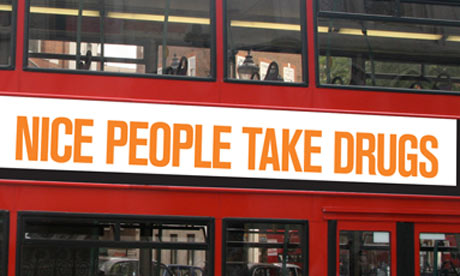
Nice People Take Drugs campaign for drugs policy reform

The Nice People Take Drugs ad campaign for drugs policy reform. Photograph: Release

Nice People Take Drugs – it's not a controversial statement. We all know people who have. The last three US presidents have admitted to it. Much has been suggested about the likely next UK prime minister. Nowadays if a politician admitted to it, the tabloids would struggle to make a story stick let alone generate a scandal. The fact is, a lot of people from all walks of life have at some point taken drugs and it's time we got real about it.

That's why this week we have launched a new campaign called Nice People Take Drugs. Buses will be travelling across London carrying this slogan in an attempt to get people talking about drugs and kickstart a drug policy debate.

Over one third of the adult population of England and Wales has used illegal drugs and almost 10 million people have smoked cannabis. According to the European Monitoring Centre for Drugs and Drug Addiction, one in eight Britons under 35 has taken cocaine. Some will have experimented with drugs with little apparent consequence, some will continue to use them on occasions.

The situation where people have to deny, hide or, if found out, regret their drug taking is simply absurd. The public is tired of the artificial representation of drugs in society, which is not truthful about the fact that all sorts of people use drugs. If we are to have a fair and effective drug policy, it must be premised on this reality.

It is time for the public to challenge the mantra adhered to by politicians and much of the media that society must continue to fight a war on drugs, as if they are an enemy worth fighting and ones that can be defeated. The implication that drugs are evil and that users of them ought to be made to feel ashamed suits this status quo, but in fact does not reflect most people's experience of drugs.

We all know that, for a minority, drugs and alcohol can have disastrous consequences – but ones that are only exacerbated by the current laws and are better addressed with robust and comprehensive public health campaigns.

Aside from the occasional tinkering with the outdated classification system, drugs and drug policy do not get properly discussed and politicians are afraid to debate the possibility of meaningful reform.

The government is reluctant to tackle the subject firstly because of the culture of fear of drugs that is used as justification for the zero-tolerance approach, and also due to politicians' uncertainty about how to make the transition from failed to improved drug policies.

The Nice People Take Drugs campaign is needed so that the public can give politicians the confidence that they need to abandon the ridiculous 'tough on drugs' stance and instead focus on finding real and effective ways to properly control drugs and manage drug use. This would make drugs much less dangerous and, critically, less available to children.

The current system has brought us powerful drugs like crack cocaine, skunk and methamphetamine; it has ravaged countries from Afghanistan to Colombia and has cost billions in a war on people who use drugs. Governments have next to no control over drugs and they are arguably more available and cheaper than ever before. In the UK it is often far easier for a 14-year-old to get cannabis than alcohol.

Breaking the taboo on drugs is the first step to reducing the harm that they can cause. By far the greatest risk to the majority of people who use drugs is criminalisation and stigmatisation. To simply ban substances and arrest those who use them is no more than a complete abdication of policy makers' responsibility to protect the health and well being of its people.

We must start a debate about the kind of drug policy that this country wants to see. The UK does not want drug laws that benefit massive drug cartels and are politically convenient for politicians, but ones that deal effectively and maturely with drugs and make our society a safer place for our children.

• Claudia Rubin is head of policy and communications for drugs charity

- Guardian

Thursday, June 4, 2009

Dealers (sic alcohol & drug) give free drugs to kids

Just as I can imagine SAB or Heineken standing outside schools or rugby matches giving out free booze... I can't imagine any 'dealer' would give away free anything...

yet here the spin is.... and yet again where drugs and alcohol are related soon after mentioning them together, the statistics are then massaged to give the impression that drugs are at fault and not alcohol...

Pretoria - Drug dealers stand at school gates to give drugs free of charge to pupils, a report on child abuse released on Thursday said.

The report, released by Solidarity Help Hand, said that the levels of child abuse in South Africa are increasing rapidly.

The report quoted a case study in the Western Cape, where it was found that 90% of child abused cases reported, drugs and alcohol played a role.

According to the case study, a five year-old child was raped while her mother was drunk.

It also said that young girls were lured into drugs and were later forced to become prostitutes.

According to the study a child is raped in South Africa every three minutes.

A study by the South African Youth Victimisation Survey in 2005 found that only about 11.3% of child rapes were reported to the police, Mariana Kriel, Solidarity Help Hand project director said.

"This means that for every reported case, an additional eight child rapes actually take place."

The report released in Pretoria, indicated that 1 410 children were murdered in 2007/08. Attempted murder of children stood at 13.7% at the same period - an increase of 22% compared to the previous year.

- SAPA

Thursday, March 26, 2009

Cocktail of heroin and tik scary - experts

The number of heroin users in Cape Town is growing steadily and the drug is is also being used with tik in a dangerous new cocktail, according to rehabilitation centres in the city.

The centres said that although tik was seldom used on its own, the use of it with heroin as a secondary drug was scary.

The Western Cape branch of the South African National Council on Alcoholism and Drug Dependence (Sanca) said it had noted a rise in the use of heroin.

'These are two of the most addictive drugs'
Grant Jardine, of the Cape Town Drug Counselling Centre, agreed that their figures showed a steady climb.

"It wasn't as dramatic as tik, which shot up suddenly. But it is the one drug that has increased each year."

Tertius Cronjé, of Sanca, said the number of users they saw with heroin-addiction problems had tripled in the past three years.

He said people were mostly using the cheaper, less pure form of the drug.

In line with research from the South African Medical Research Council, Cronjé said most users smoked the drug.

According to the council, the Western Cape is the only province in the country where the majority of users took the drug in this way. In other areas, most users injected the drug.

Cronjé said this could be attributed to the fear of contracting HIV and Aids.

Research showed that the recovery rate for heroin users was dismal. But, he said, the most alarming new development was the use of heroin in conjunction with tik.

He said the combination held devastating effects for the user.

"These are two of the most addictive drugs. Using them in tandem is as bad as addiction gets. It's very difficult to come off; you can't really win here."

It was made worse by the fact that heroin carried a major risk of overdosing, while tik held severely damaging psychological effects.

Jurgens Smit, the director of Western Cape-based Faces and Voices of Recovery South Africa, said the combination of the two drugs was "a disaster".

"We first saw this surfacing around two years ago. But it has been spreading, especially across the Cape Flats."

Smit said early intervention was needed to clamp down on the spiralling drug problem.

"We need to start intervention programmes early, targeting children as young as six years old. Society is responsible for offering young people healthy alternatives," he said.

- Cape Argus

Tuesday, March 17, 2009

R170m drug bust at OR Tambo Airport

Law enforcement agencies at OR Tambo International Airport have seized 565kg of CAT, the chemical used to manufacture the popular drug tik (crystal meth).

The consignment, the biggest seized at a South African airport in five years and worth about R170-million, was found on flight EK761 from Pakistan soon after it landed in Joburg at 2pm on Tuesday.

A joint task team of Interpol and the SA Police Service's Transinternational Investigative Unit and Cargo Anti-Smuggling Unit - acting on a tip-off - netted 20 bags of the chemical hidden in an Emirates plane's cargo hold.

'The investigation will be conducted to find out if the crew were involved'
The Cargo Anti-Smuggling Unit's forensics department tested the contents of the consignment found on the passenger and cargo plane, and confirmed that it was the chemical used to produce tik.

Authorities said the investigation was still at a very sensitive stage and they would not speculate whether a drug-smuggling syndicate was involved.

No arrests had been made last night.

"The investigation will be conducted to find out if the crew were involved," Interpol and Crime Intelligence spokesperson Senior Superintendent Tummi Golding, said last night.

Golding said an investigation was under way to establish if there was a link between Tuesday's bust and the one made in Brazil last week, where 57 people, including airport staff, police officials and crew members were arrested.

- Pretoria News